Blog
Why are moths attracted to our light bulbs?
Or why moths are less silly than you may think
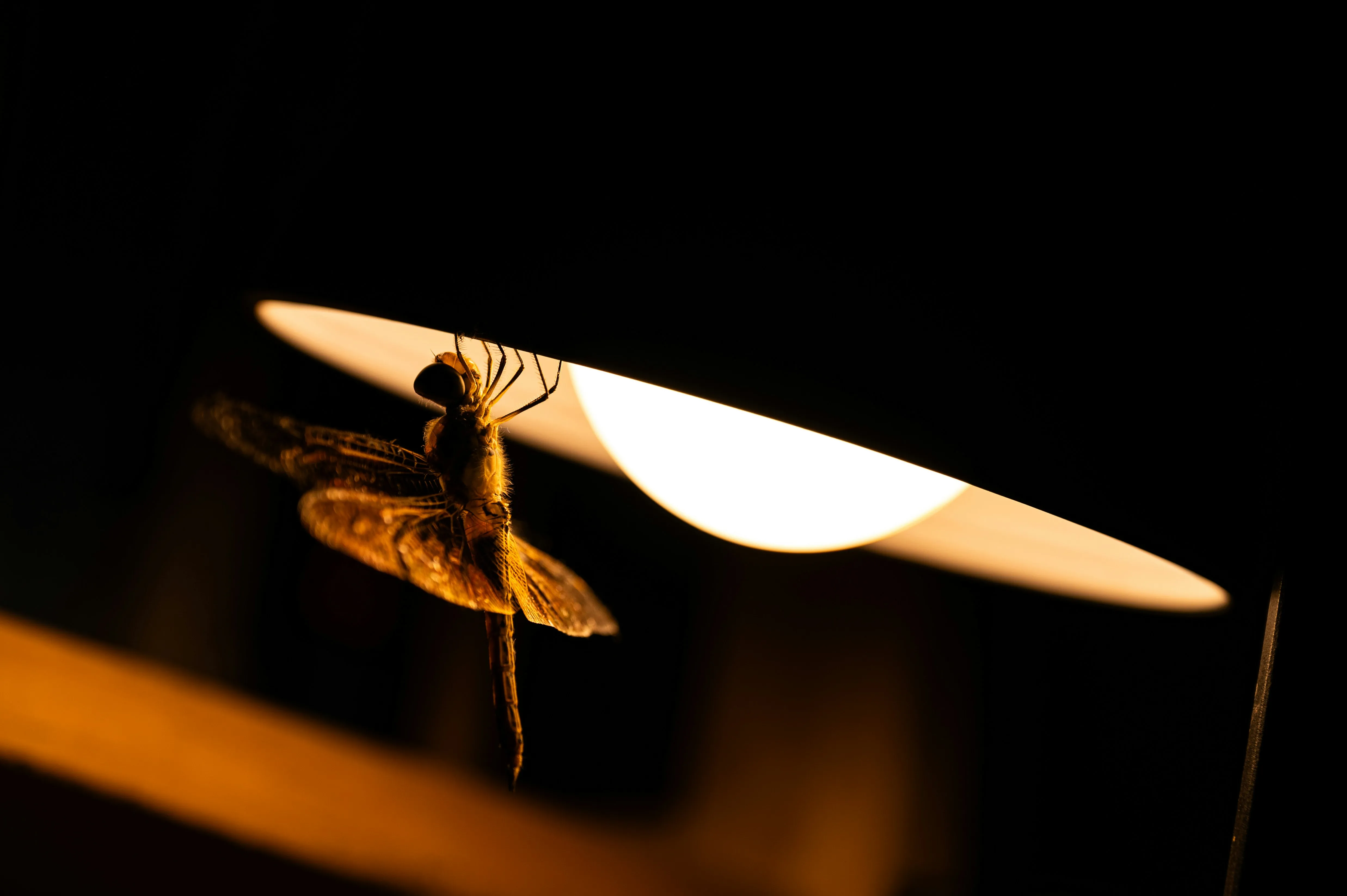
Summer’s in and so are the moths. But why are moths so attracted to our lights, anyway? And why would moths steer straight into candle flames?
Since candle lights and light bulbs are artificial sources of lights, they’re relatively new in the grand scheme of things. Before these existed, moths could rely on the stars and the moon to guide them through the night. The stars and the moon are at what’s called optical infinity. This means that the rays coming from them are parallel. Consequently, this makes them great for use as a sort of compass. Therefore, insects and moths, can rely on the moon and the stars to steer in a straight line. Interestingly, they can also use the light as a way to find their way back home. As insects have compound eyes, they can keep the light in a particular part of their eye (or in an ommatidium, to be more precise).
Light serving as a guide works beautifully when it is at optical infinity so that the rays are parallel. When this isn’t the case, moths find themselves steering towards the light in a spiral. In the case of candle flames, this unfortunately means the end of the moth.
Before you go away thinking moths are silly for flying into a flame, you first have to realise that candle flames aren’t something that moths tend to encounter often. More often that not, moths do find their way around by using celestial lights. It’s just that we’re not paying attention.
This fun little fact came from The God Delusion by Richard Dawkins, which is an interesting book in itself. I’ve condensed this topic, so for a fuller description of this seemingly evolutionary mishap, I’d recommend consulting the book.
Photo by Phạm Mạnh on Unsplash
Last edited: 25th July 2026